
14 Clever Ways to Store Pots, Pans, and Lids Without Cluttering Your Kitchen. The problem isn’t always a lack of storage space.
Your kitchen cabinets may look spacious until you try to put away one frying pan and suddenly trigger an avalanche of lids, saucepans, and baking trays. Sound familiar? The problem isn’t always a lack of storage space. Sometimes, it’s the way cookware is arranged. Pans have long handles, lids refuse to stack neatly, and bulky pots take up more room than they seem to deserve.
You don’t need a kitchen renovation or a cabinet full of expensive organizers. A few thoughtful changes can make your cookware easier to reach, simpler to put away, and much less chaotic.
We’ve collected 14 simple yet original ways to organize pots, pans, and lids — including several ideas you can try before spending a single dollar.
1. Nest Your Cookware by Shape
Best for: cabinets filled with mismatched pots and pans.
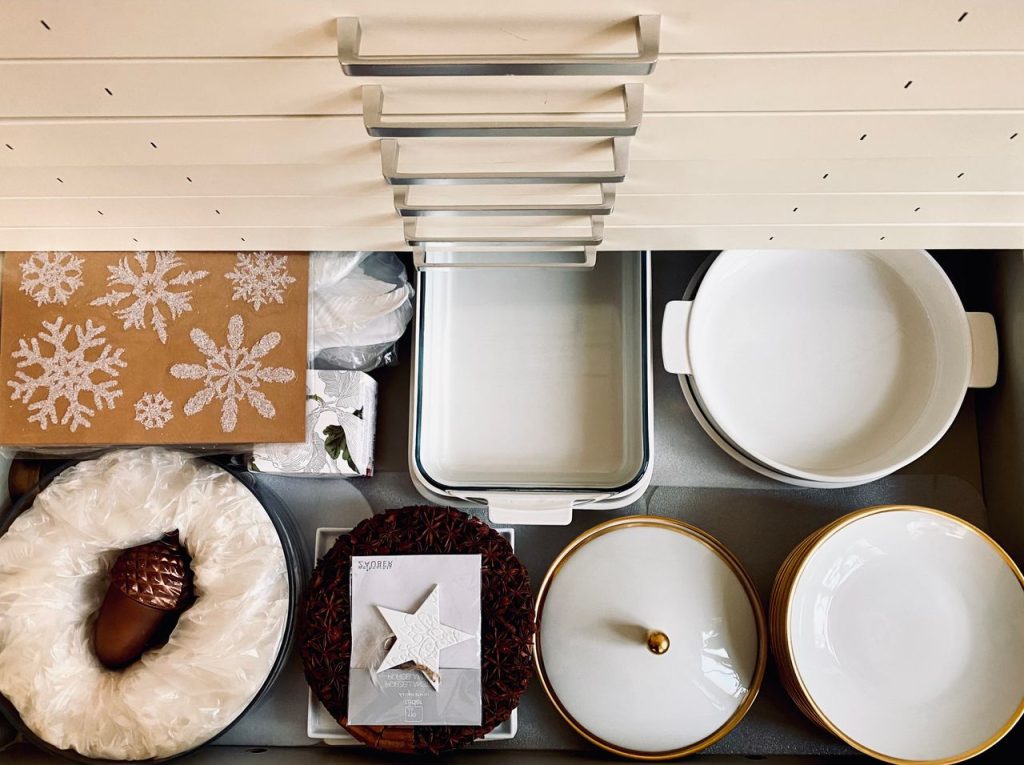
Stacking cookware from largest to smallest seems logical, but it doesn’t always save the most space. Try grouping pieces by shape and how you use them instead. Shallow frying pans can nest together, while deeper saucepans form a separate stack.
Keep the pots you use most often near the front. Store specialty cookware, such as a large stockpot or a paella pan, farther back if you only use it occasionally.
Small-kitchen trick: If two pans almost fit together but their handles get in the way, rotate one slightly before stacking. Just avoid forcing cookware together or stacking it in a way that could scratch nonstick surfaces.
2. Give Lids Their Own Storage Zone
Best for: anyone who has ever searched for a lid while dinner was cooking.
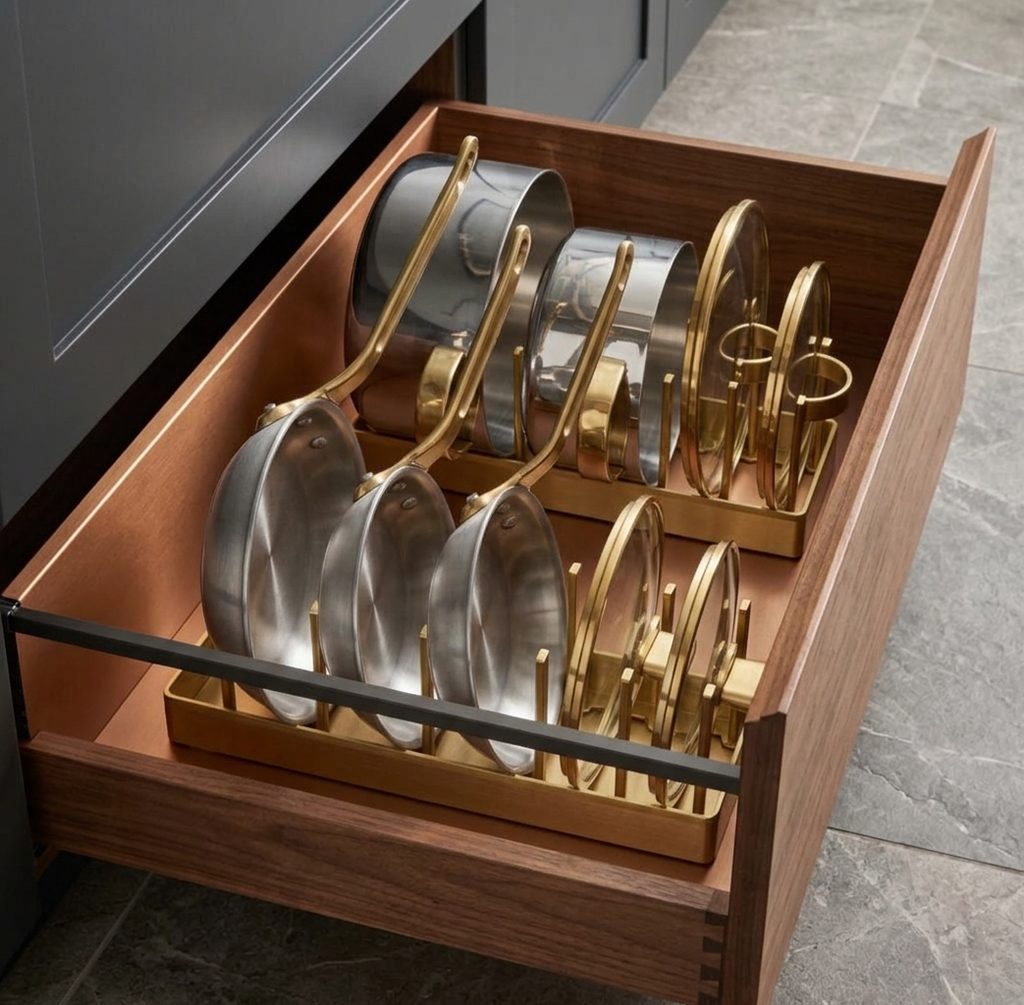
Lids are awkward because their handles stop them from stacking neatly. Instead of balancing them on top of pots, store them vertically in a narrow rack or a divided drawer.
You can also use a small, sturdy file organizer if its compartments are wide enough and the material can safely support your lids. Measure the tallest lid, including its handle. A rack that looks spacious online may not fit inside your actual cabinet.
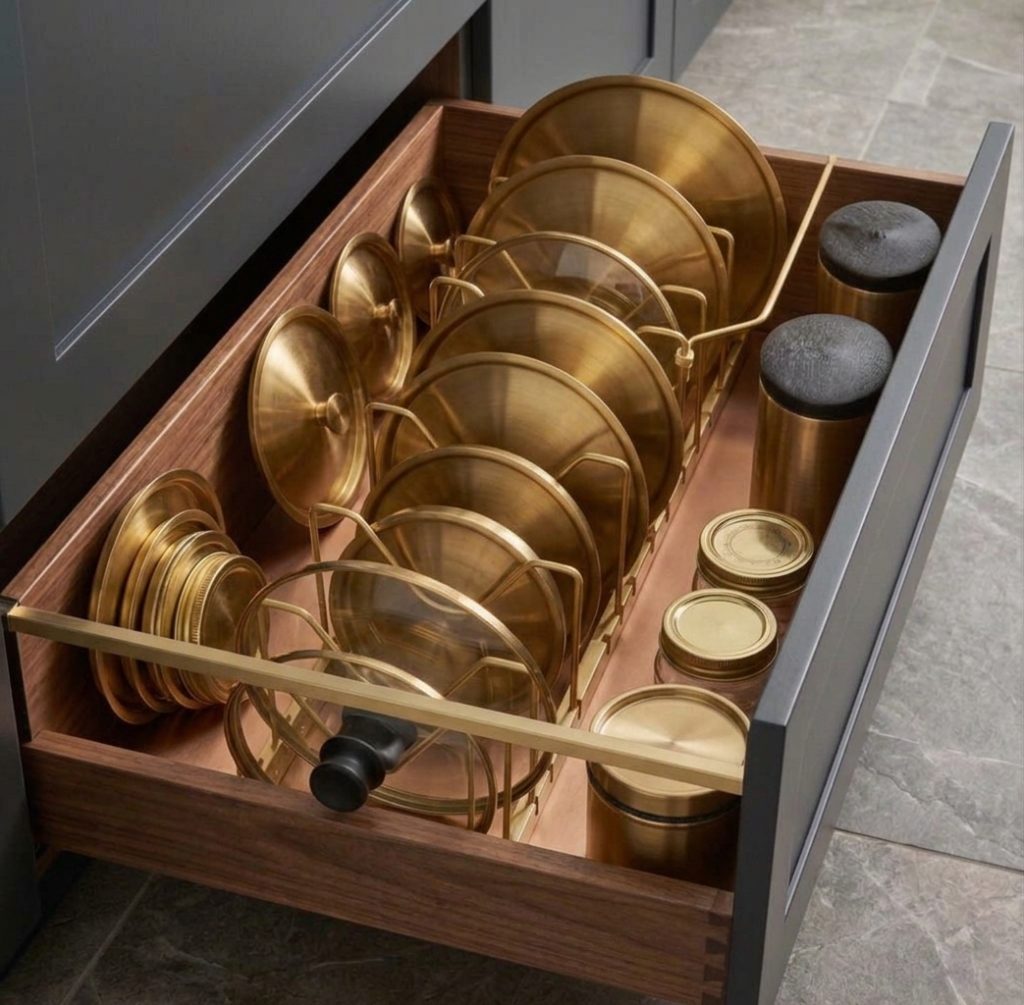
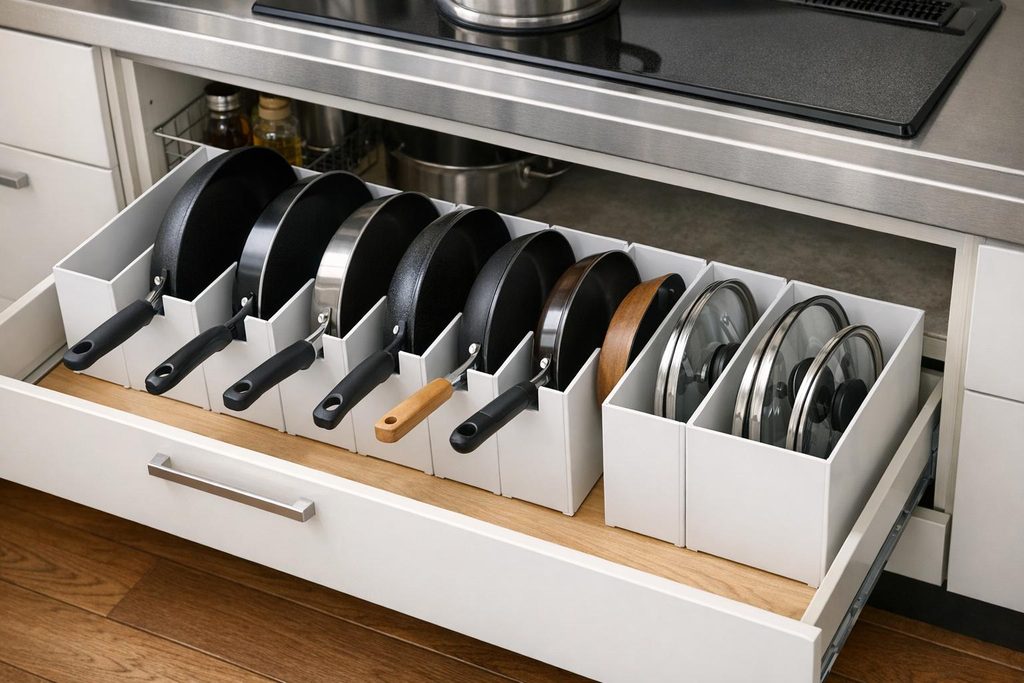
3. Turn a Deep Drawer Into a Cookware Station
Best for: kitchens with large lower drawers
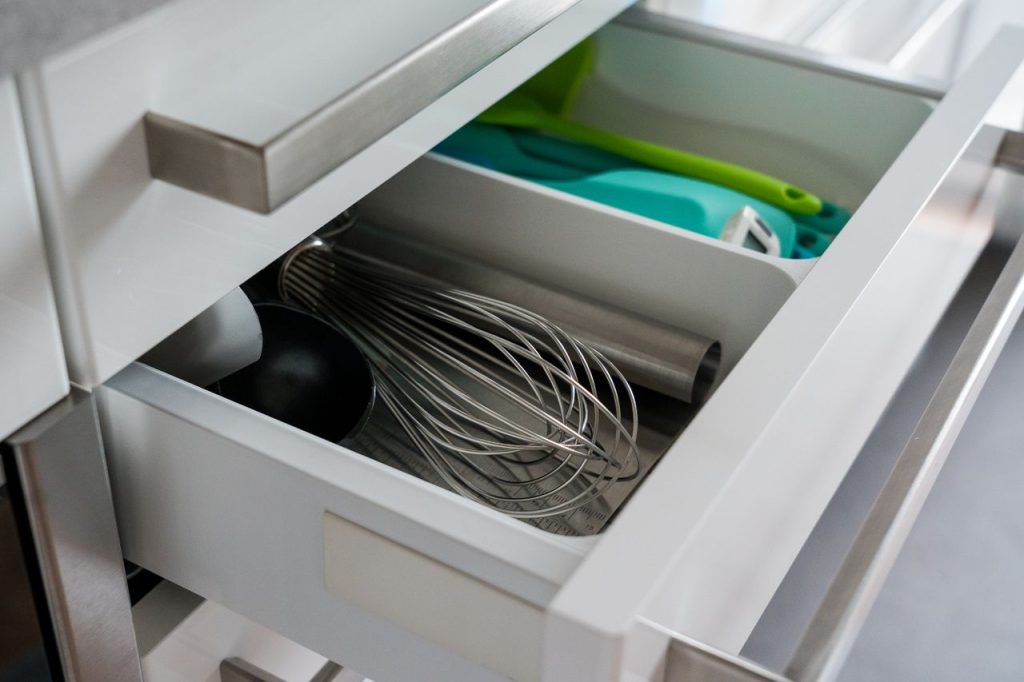
A deep drawer can be more convenient than a cabinet because you can see everything from above. Arrange pans in a single layer when possible, placing frequently used pieces at the front.
If the drawer is wide enough, create separate zones for frying pans, small saucepans, and lids. Adjustable dividers can help stop everything from sliding around whenever you open the drawer. Check the drawer’s weight limit before loading it with heavy cast-iron cookware.
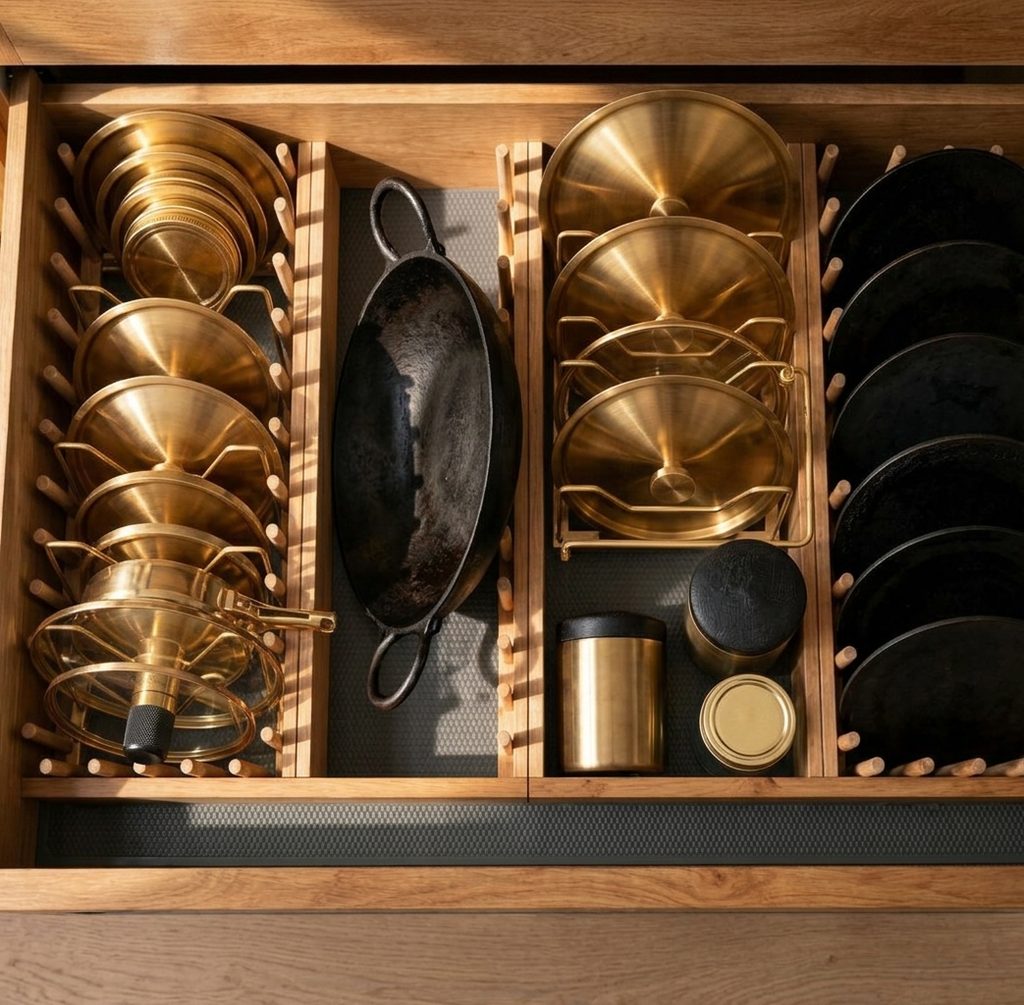
4. Install a Wall Rail for Frequently Used Pans
Best for: kitchens with an empty stretch of wall.
A wall-mounted rail with sturdy hooks can turn everyday cookware into part of your kitchen setup. Hang your most-used frying pan, a small saucepan, or a lightweight strainer where you can grab it quickly. This approach frees up cabinet space and makes frequently used items easy to reach.
Small-kitchen trick: Choose one compact section of wall rather than hanging every pan you own. A few well-placed pieces look intentional; too many can make the kitchen feel crowded.
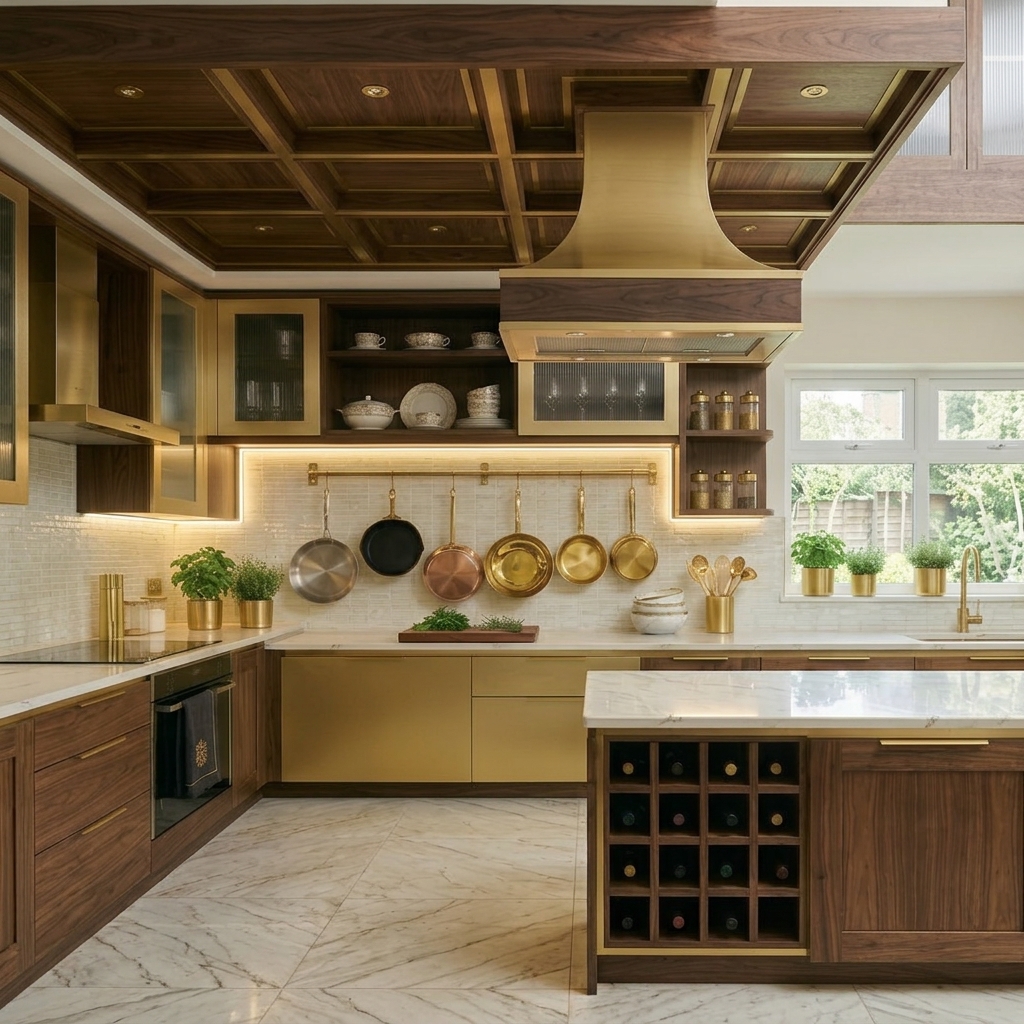
5. Use Tension Rods to Divide a Cabinet
Best for: renters and people who prefer no-drill solutions.
A pair of properly fitted tension rods can create simple vertical dividers for lightweight trays, cutting boards, and compatible pan lids. Position them so each item has its own slot instead of leaning against everything else. This is a flexible way to make better use of an existing cabinet without installing a permanent rack.
Make sure the rods fit securely and won’t slip under the weight.
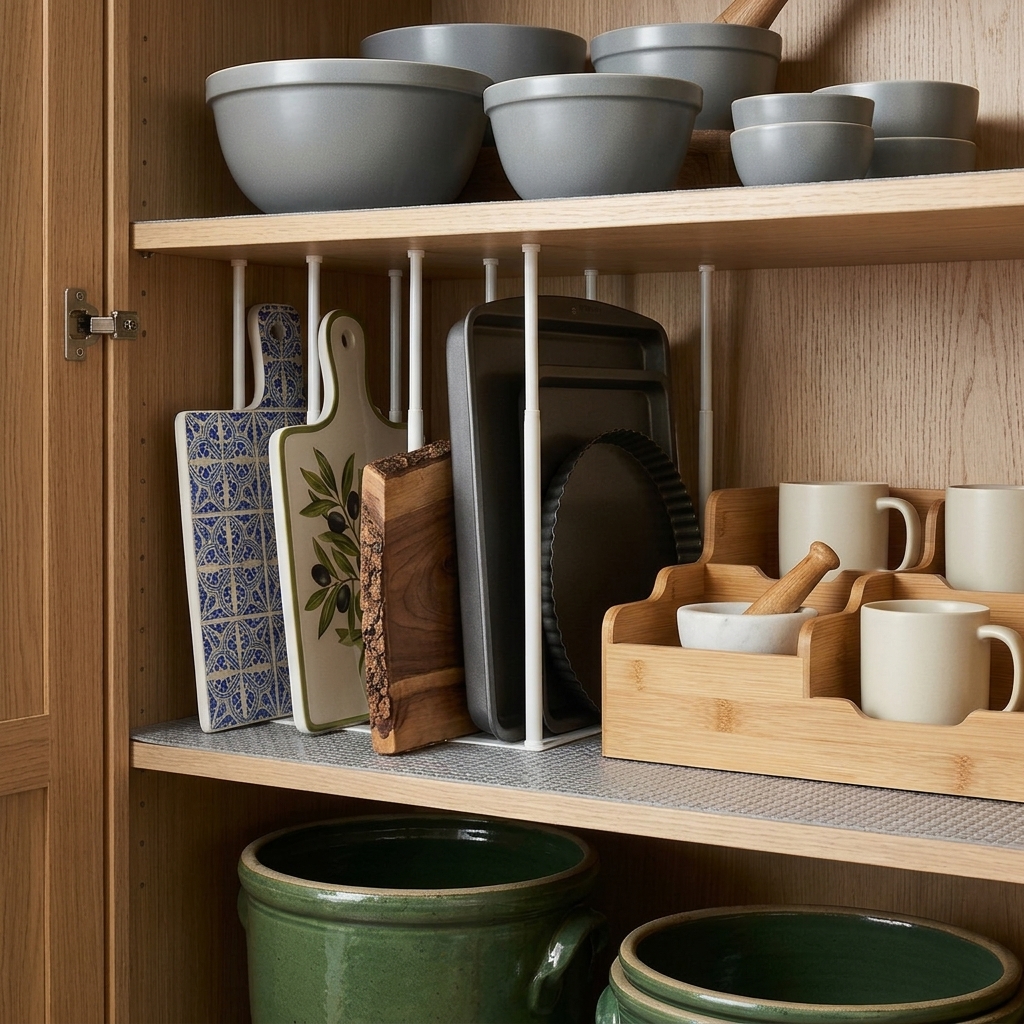
6. Store Baking Trays Like Books
Best for: baking sheets, roasting pans, and flat cookware.
Flat trays often create a frustrating stack: you need the one at the bottom, so you have to remove everything above it. Store them vertically instead, using a suitable divider or sturdy rack.
If your cabinet already has sturdy vertical partitions, use the existing gaps. Just make sure the trays cannot tip over or slide out when you remove one.
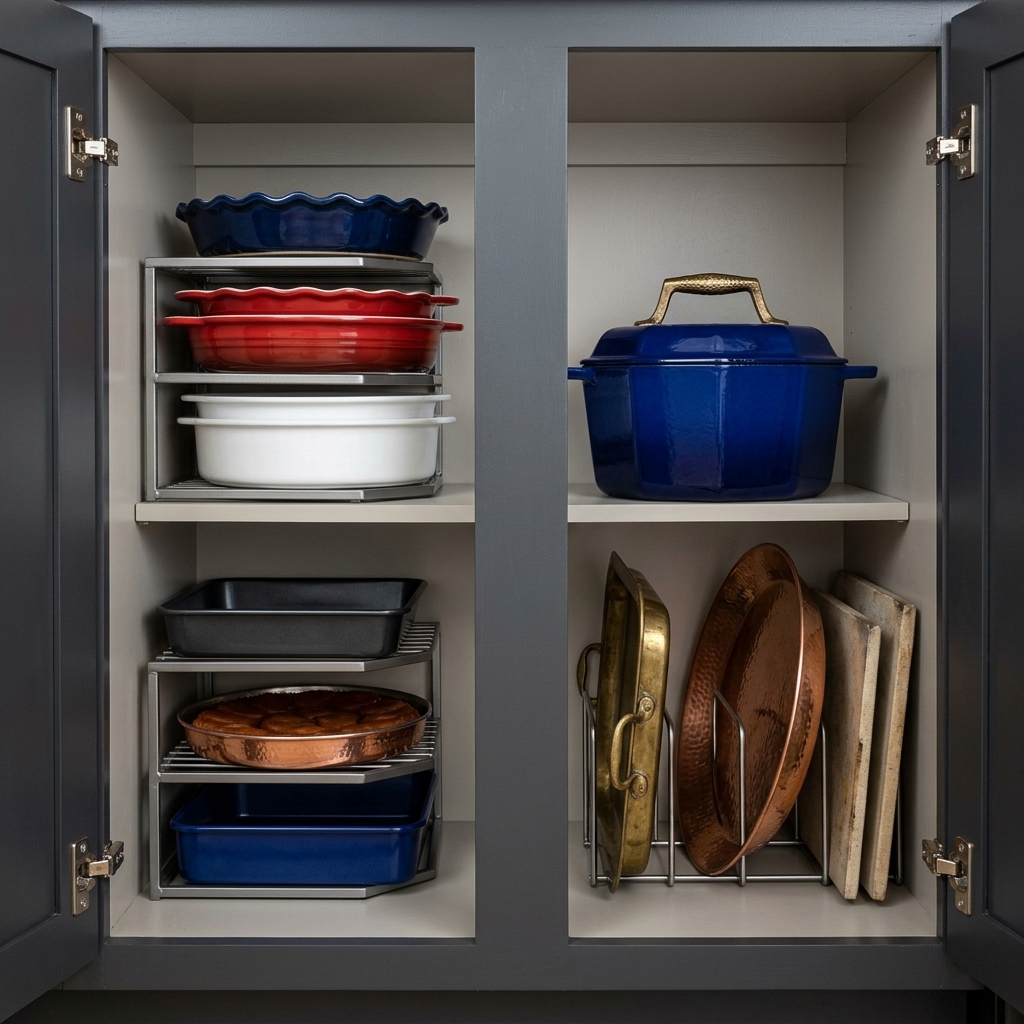
7. Add a Second Level Inside a Cabinet
Best for: cabinets with unused vertical space.
Look at the space between the top of your stacked pots and the shelf above them. If there’s enough room, a stable shelf insert can create a second level for smaller pans, lids, or accessories. The trick is to use the height that’s already there instead of buying a larger storage unit.
Measure the cabinet’s interior height and check that the insert leaves enough clearance for handles and easy removal.
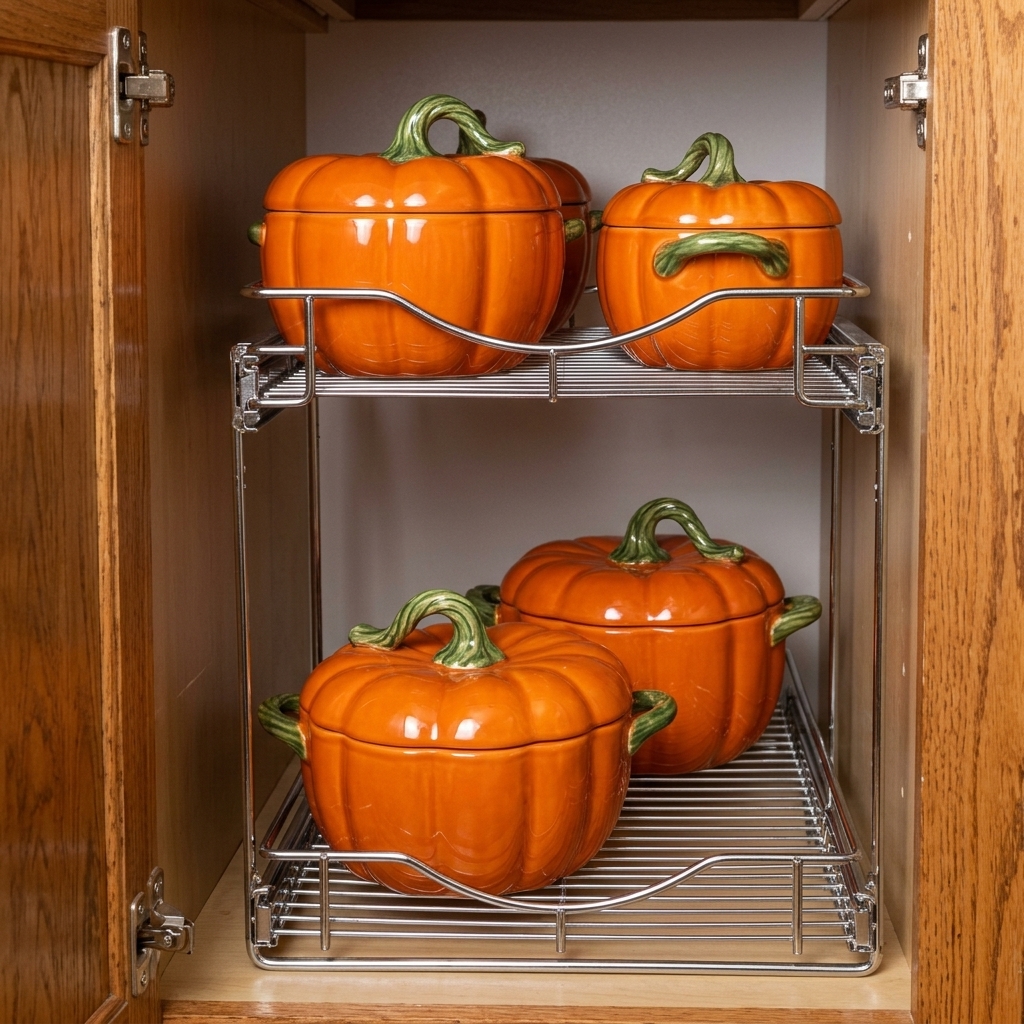
8. Try a Pegboard for Flexible Storage
Best for: people who like adjustable organization.
A properly installed pegboard can hold lightweight cookware and kitchen tools, with hooks that can be moved as your needs change. It’s especially useful if your collection changes frequently or you want to keep a few everyday items within reach.
You can rearrange the hooks instead of redesigning the entire storage area whenever you buy a new pan. Use a mounting system designed for the wall type and the intended load. Heavy pots need suitable support, not just a few generic hooks.
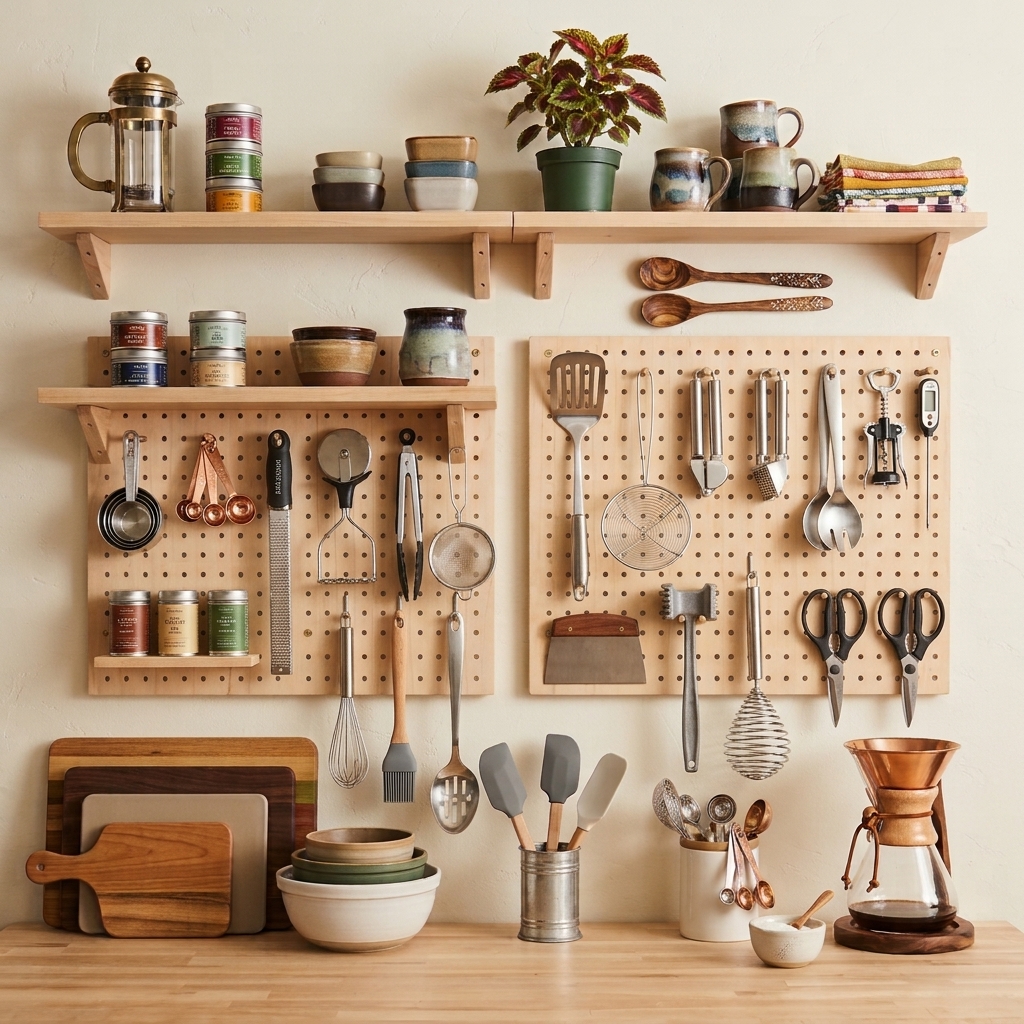
9. Protect Nonstick Pans When Stacking
Best for: anyone with nonstick or delicate cookware.
Sometimes stacking is unavoidable. In that case, place pan protectors, soft felt separators, or other manufacturer-compatible protective layers between pans to reduce scratches.
You can often use this simple method with cookware you already own, without changing your cabinets at all.
Small-kitchen trick: Keep the separators with the pans rather than in a separate drawer. That makes it easier to put everything away properly after washing.
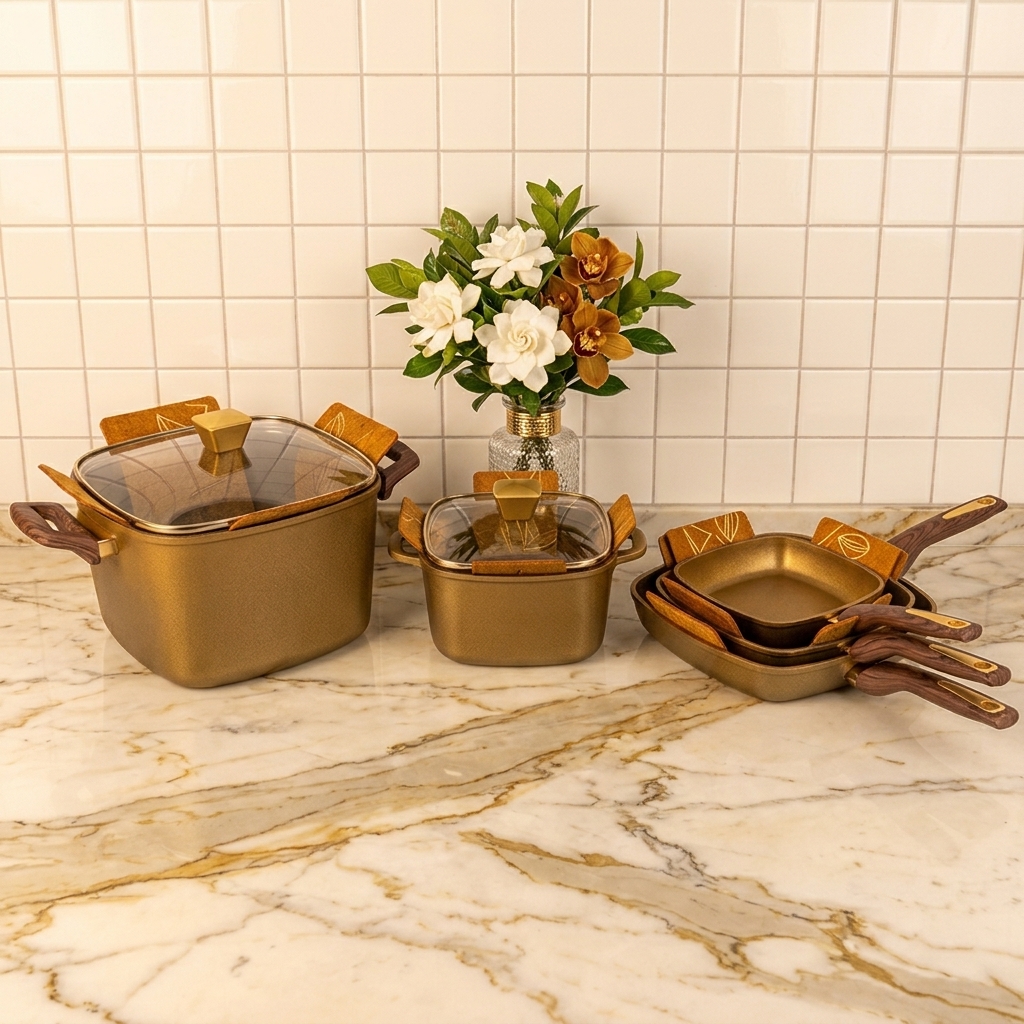
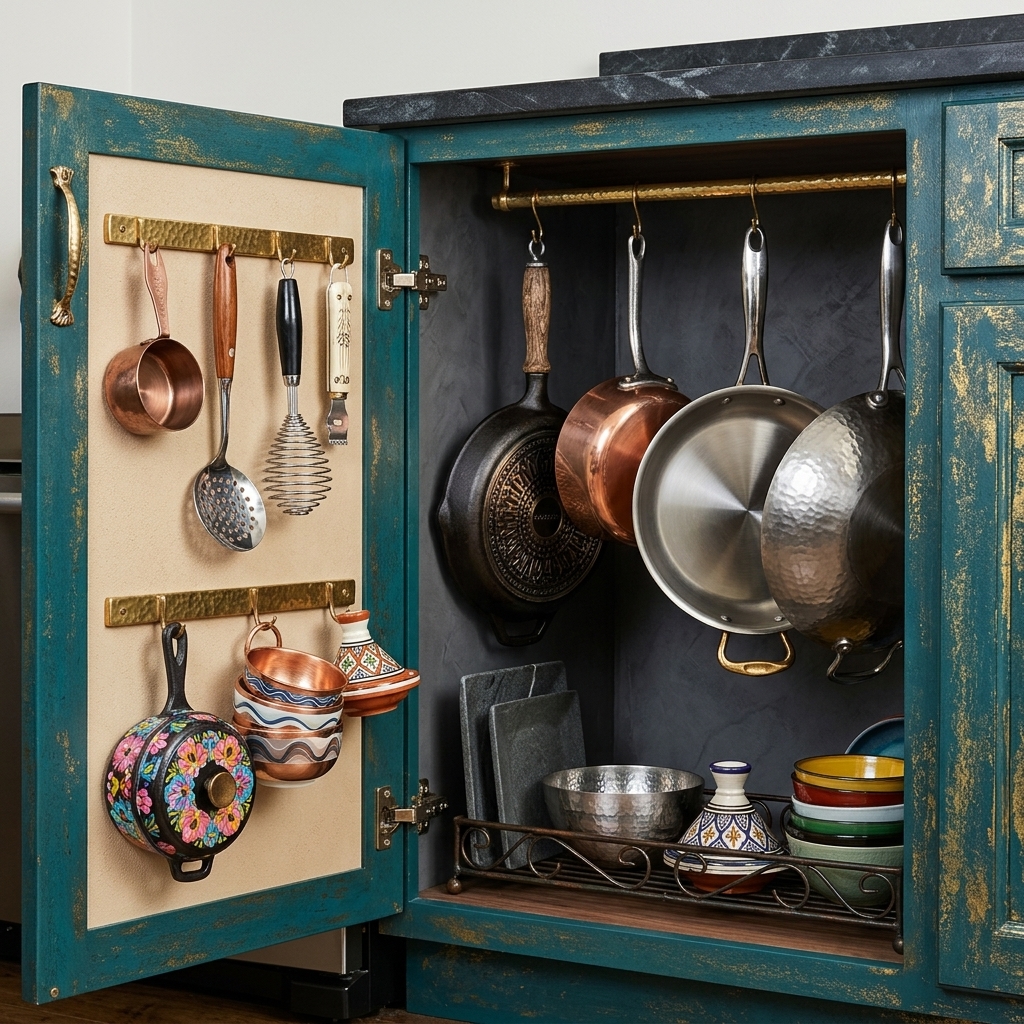
10. Use the Inside of a Cabinet Door
Best for: small lids and lightweight accessories.
The inside of a cabinet door can offer useful storage space that often goes unnoticed. A slim, securely mounted lid holder may keep lids upright and free up room on the shelf.
Before installing anything, close the door slowly and check that the holder and its contents don’t hit the shelves or cookware inside. A removable organizer may work, but check its weight rating and whether the mounting method is compatible with your cabinet finish.
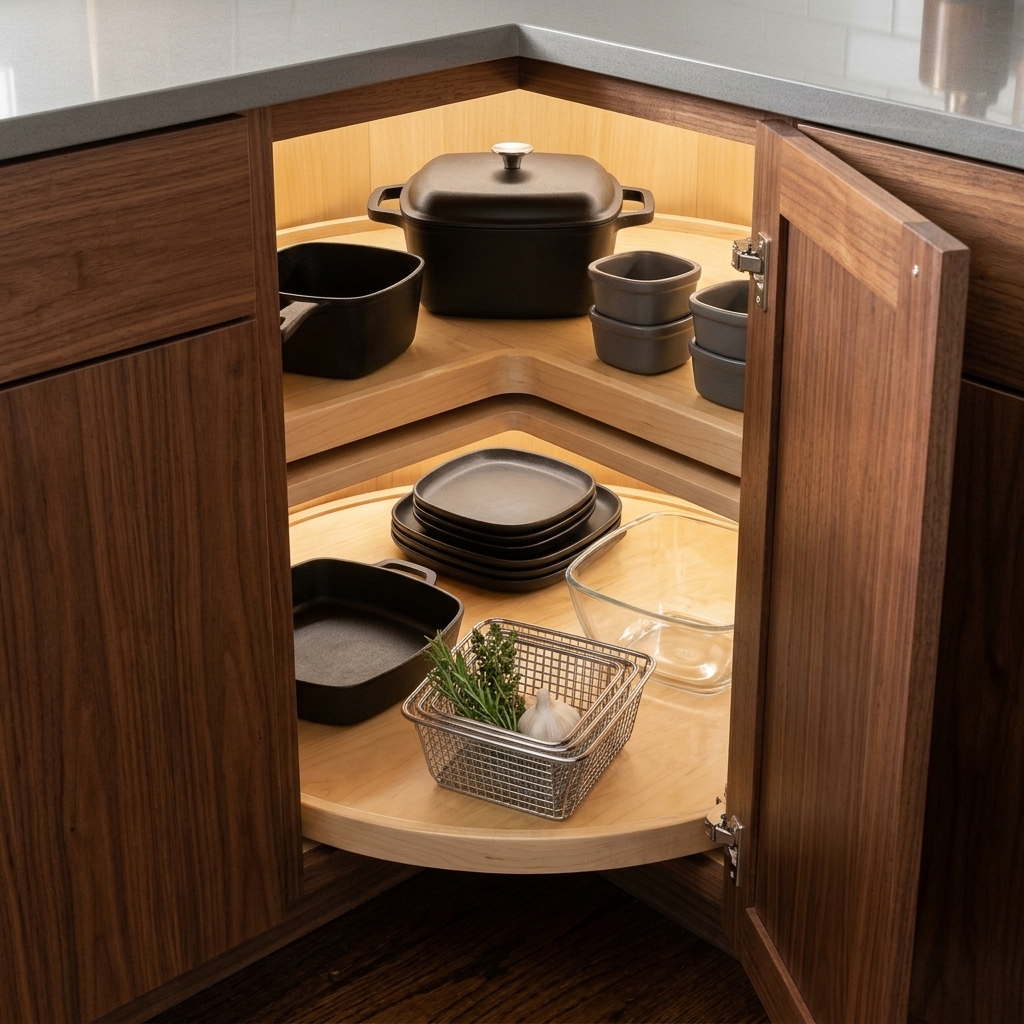
11. Make a Corner Organizer Work
Best for: deep or awkward corner cabinets.
Corner cabinets can become black holes for cookware. A suitable pull-out system or rotating organizer can make items easier to reach without forcing you to move half the cabinet first.
If you don’t want to install anything, keep only occasional-use cookware in the deepest section and reserve the front for pieces you use regularly. Don’t store your everyday frying pan in a place that requires a small excavation to retrieve it.
12. Create a Dedicated Everyday-Pan Shortcut
Best for: busy households and frequent home cooks.
You probably don’t use every pan equally. Identify the two or three pieces you reach for most often and give them the easiest storage spots. That might mean keeping one frying pan in a low drawer, your favorite saucepan near the stove, and a large stockpot on a higher shelf.
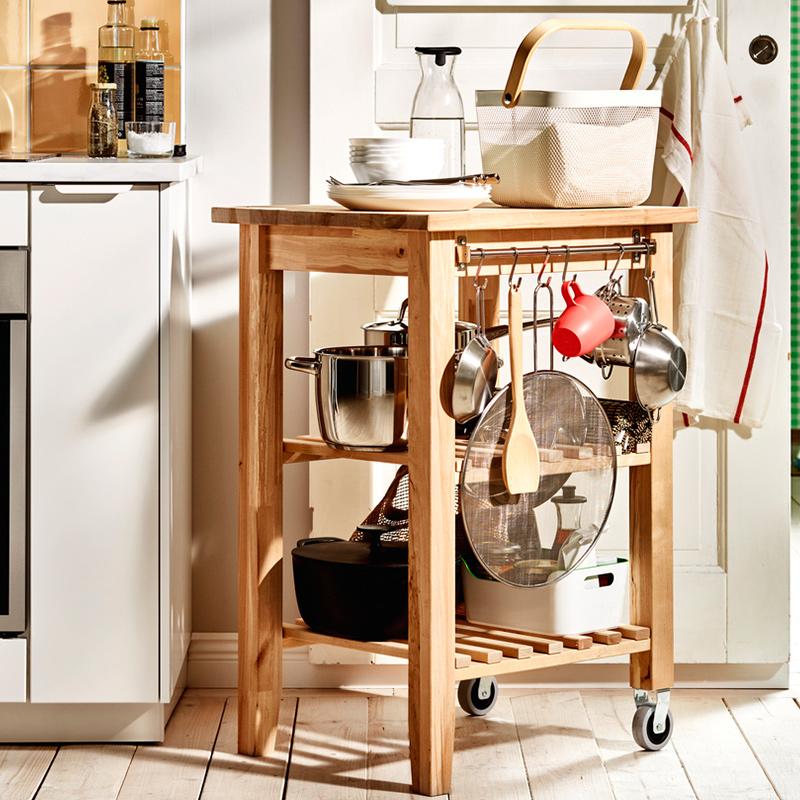
13. Use a Small Rolling Cart for Overflow
Best for: kitchens with a little spare floor space.
A narrow rolling cart can hold occasional-use cookware, baking accessories, or bulky pots that don’t fit comfortably in your cabinets. It can also serve as temporary storage when you’re cooking a big meal.
Choose a cart that fits your kitchen’s layout and doesn’t block walkways, appliances, or cabinet doors.
14. Declutter Before Buying Another Organizer
Best for: anyone whose cabinets are full despite having plenty of storage accessories.
Before buying another rack, take everything out of the cabinet and ask three questions:
- Do I use this pan regularly?
- Does another piece of cookware do the same job?
- Is it worth the space it takes up?
You may discover that you have multiple pans for the same task, lids that no longer fit anything, or cookware you haven’t touched in years.
You don’t have to get rid of useful specialty items. Simply move occasional-use pieces to less accessible storage and keep everyday essentials close at hand.
Which Storage Idea Should You Try First?
| Your kitchen problem | Start with this idea |
|---|---|
| Lids keep falling over | Vertical lid storage |
| You can’t reach pans at the bottom | Deep drawer or vertical storage |
| Your cabinets have unused height | Add a stable shelf insert |
| You rent and can’t drill holes | Tension rods or existing dividers |
| Nonstick pans get scratched | Protective separators |
| Your everyday cookware is hard to reach | Create an everyday-pan zone |
| You have no idea where to start | Declutter and reorganize first |
Before You Swipe Away
Start with the most annoying problem — runaway lids, awkward stacks, or pans you can never reach — and solve that one first. Rearrange what you already own before investing in organizers, and give your everyday cookware the easiest spots to access. Sometimes, buying more organizers isn’t the solution. A little reorganization — and letting go of old pans you haven’t used in ages — might be all you need to create more space!
Was this helpful? Let us know in the comments, and don’t forget to like and share with someone who could use a little kitchen organization inspiration! ❤️







Leave a Reply